Urach Residential Palace
One of Württemberg's late medieval palaces
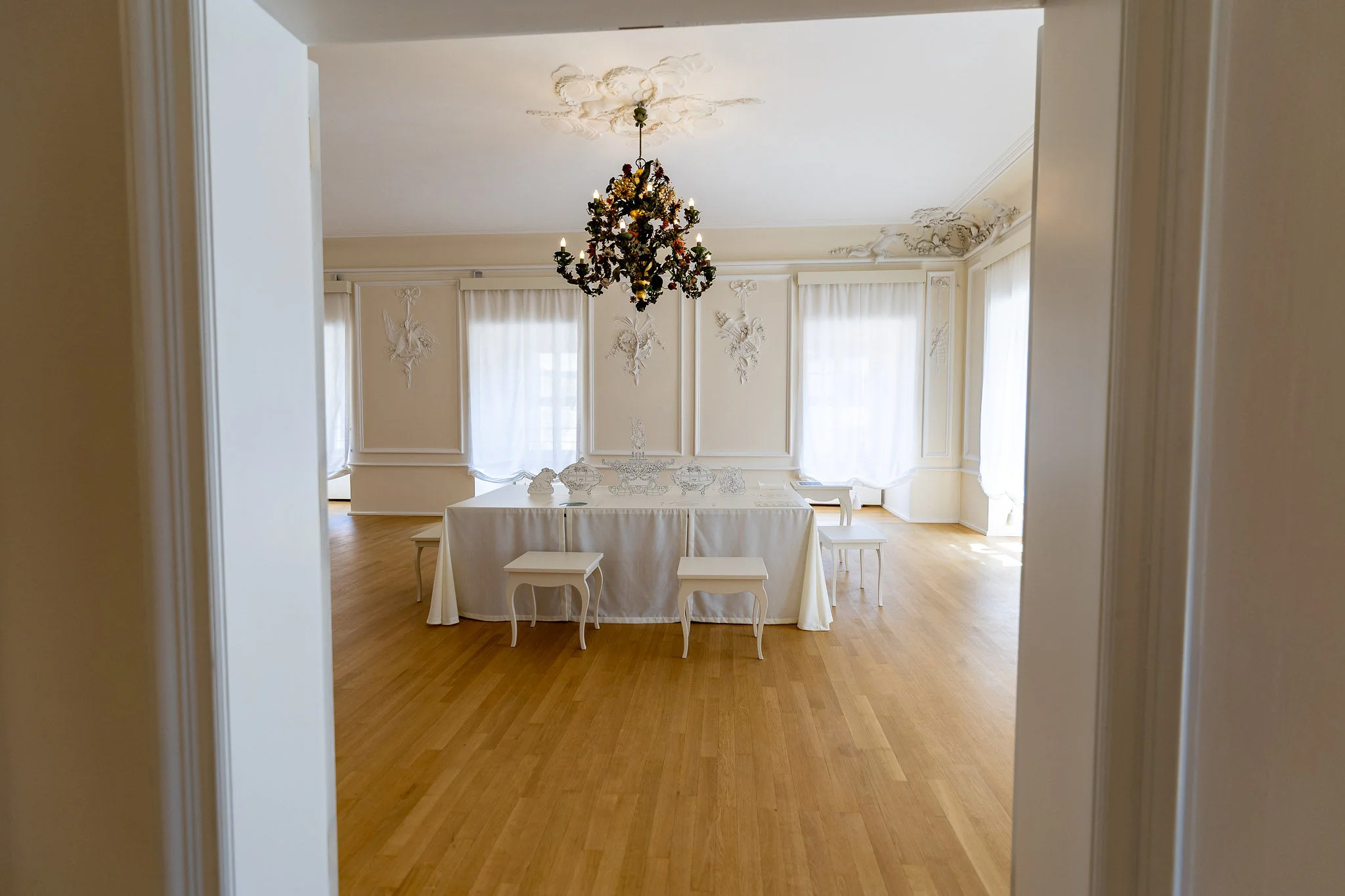
Residenzschloss Urach, Zwei Tische im Weißen Saal

Iron flowers taken from natureThe floral chandelier

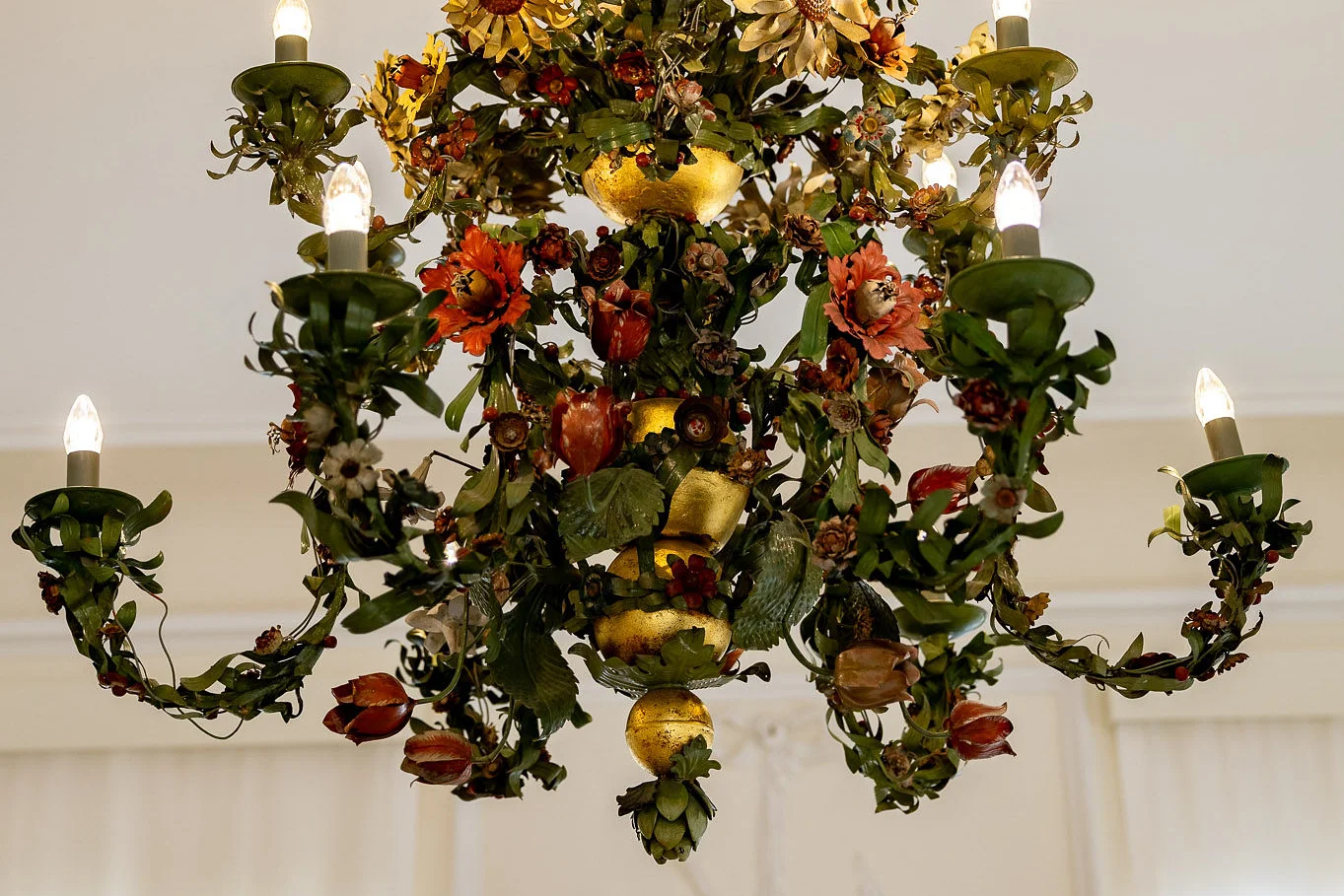
The chandelier that hangs at Urach, decorated with wild flowers and vines, lent light to the festive table of Duke Carl Eugen and his illustrious guests. The floral chandelier of iron is one of the original pieces from the White Hall circa 1765.
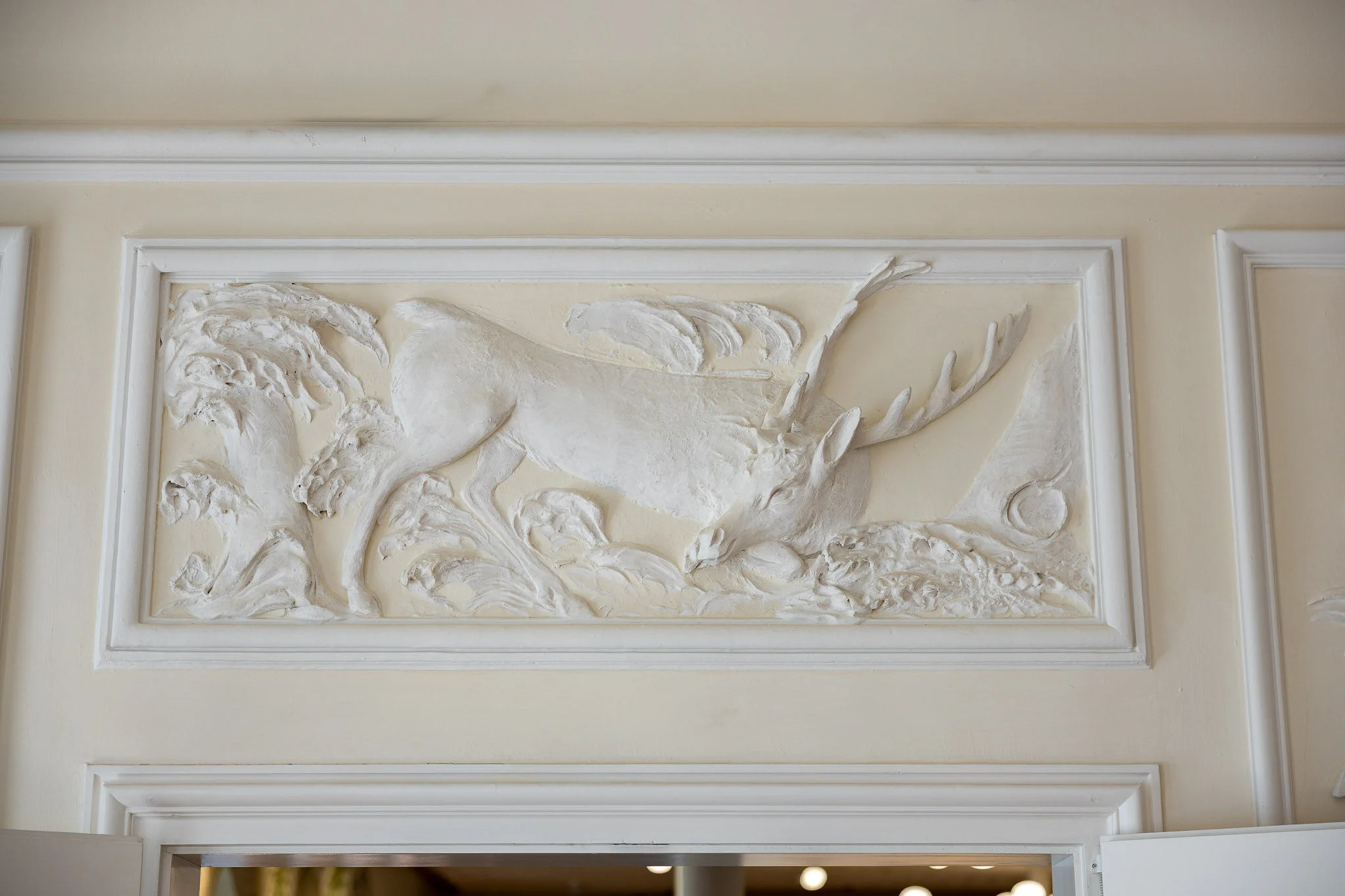
Residenzschloss Urach, Detailansicht, Supraporte mit Hirsch

[Translate to Englisch:] Im stuckierten Bildfeld über der Tür ist ein Hirsch zu sehen – ein typisches Jagdmotiv.

Festive tables

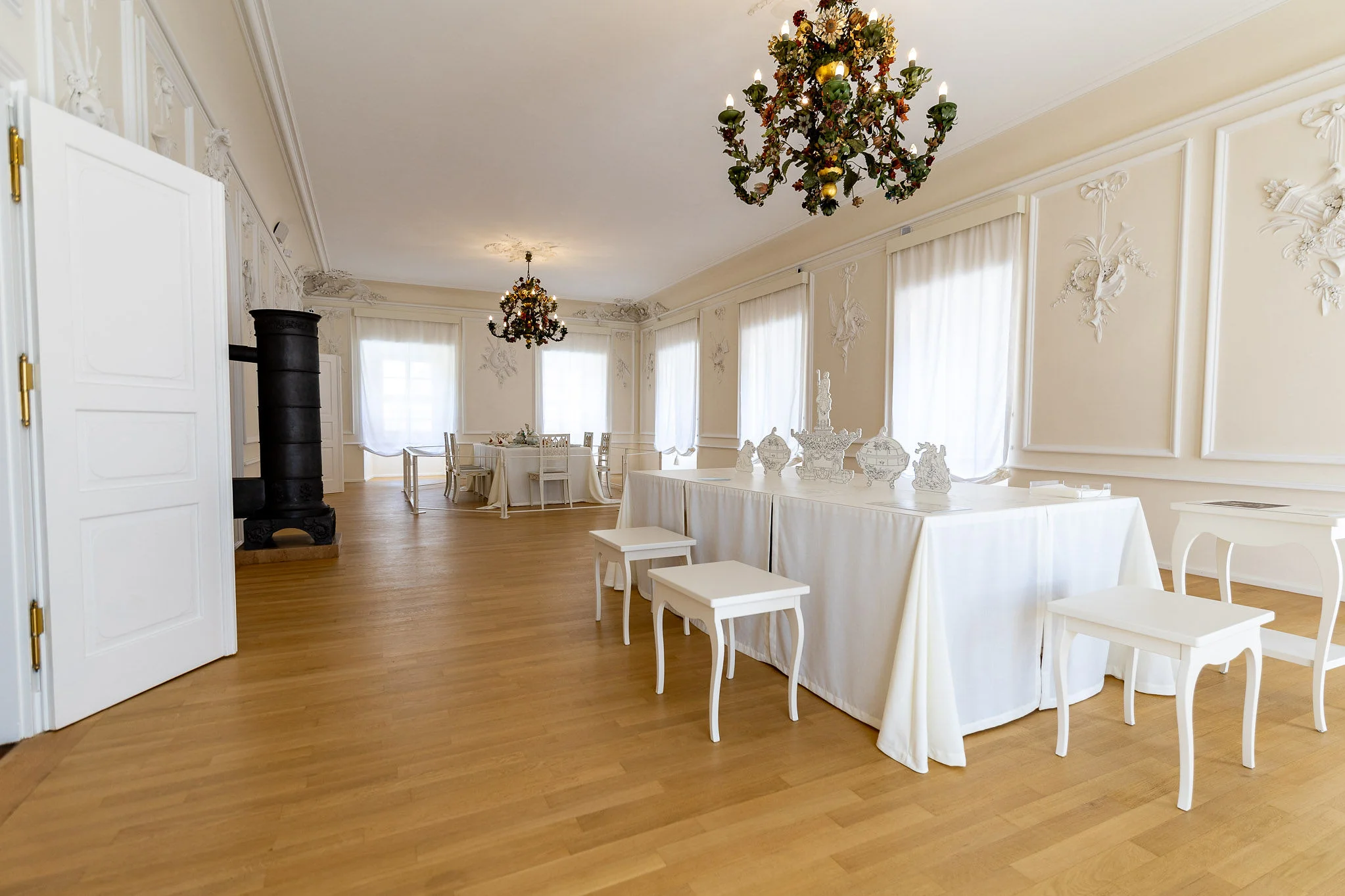
Today, the White Hall is strikingly accented by the colorful floral chandelier. The room was decorated around 1765 by Duke Carl Eugen and used as a dining hall. Urach Palace served as an intimate retreat for the duke, where he could relax with close friends. The filigreed stucco in the White Hall capture Carl Eugen’s favorite pastimes when at Urach: hunting and music. They likely originated from Valentin Sonnenschein and were extensively restored in the 1960s.

Residenzschloss Urach, Blumenkronleuchter im Weißen Saal

[Translate to Englisch:] Aus Blech nachgebildete Blüten verzieren den Leuchter.

A stunning variety of blossoms

The floral chandelier of iron is comprised of a bewitching variety of replicated blossoms. The bounty becomes clear upon closer inspection: wild flowers, acanthus, artichoke, hibiscus, coltsfoot, hepatica, carnation, rose, silver thistle, sunflower, holly, and globeflower. The tulip, a luxury flower especially coveted in the Baroque period, is likewise present in the floral bouquet. Like the flowers, the green vines on the chandelier are vivid and lush.

Residenzschloss Urach, Tisch und Blumenleuchter im Weißen Saal

[Translate to Englisch:] Blick in den Weißen Saal mit einem der Blumenleuchter.

Chandelier arms like flower garlands

The floral chandelier supposedly originated in France around 1765. It is one of the original items from the White Hall. The exuberant blossoms hide the chandelier's structural framework almost completely. The chandelier's newel post consists of several golden balls, decreasing in size as they descend. The double strand of s-shaped chandelier arms extend from here, designed as flower garlands.

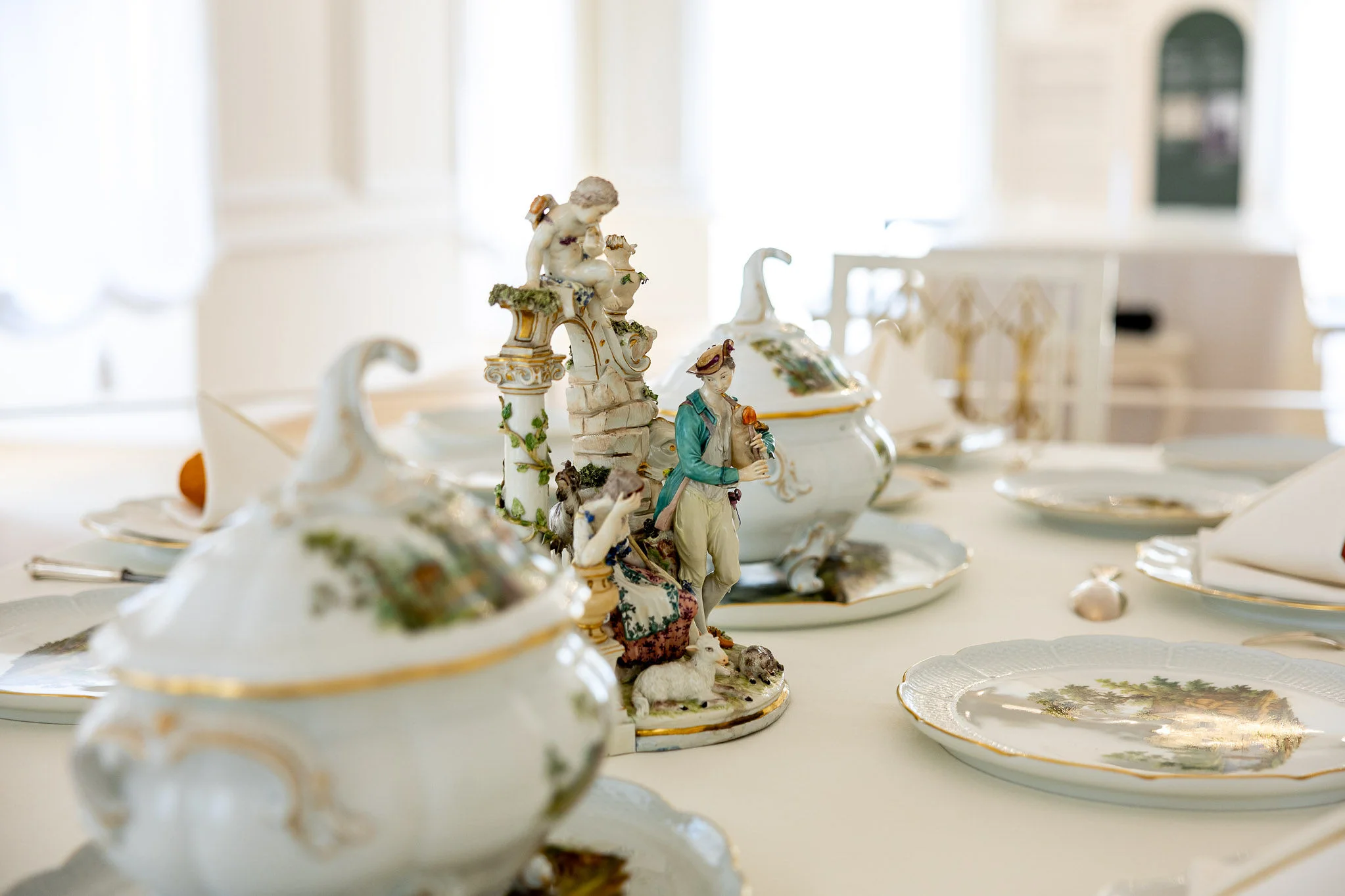
Residenzschloss Urach, Detailansicht einer gedeckten Tafel im Weißen Saal

[Translate to Englisch:] Auch bei Tischdekoration und Geschirr wurde das Thema Natur und Jagd aufgegriffen.

Nature as the source of inspiration

At the end of the 18th century, artists drew on the richness of forms found in nature to create interiors that would meet the passion for delicate and fluid decor. The inexhaustible diversity of the plant world offered a constant source of inspiration. Court society had also discovered an interest in the beauty of nature in the Swabian Alb. The floral chandelier was one way in which they brought this natural experience into the palace interior.

Learn more

Art & spaces

Work & play

Please select a maximum of 5 keywords.